
No products in the cart.
The Latest iPhone Ultra Rumors and Leaks: Everything We Know About Apple’s First Foldable
Problem
Apple has talked about a folding iPhone since 2017. That’s not a typo. Nine years of leaks, patent filings, and “sources say” articles, and not one actual product. Meanwhile Samsung shipped its seventh generation of foldables. Huawei’s on the market too. Google put out the Pixel Fold. Apple just… waited.
Agitation
Here’s the thing about waiting nine years on a product category: it stops looking cautious and starts looking stuck. Early rumors said 2020. Then 2022. Then 2023, then 2024. Every date came and went. At some point you have to wonder if Apple actually knows how to solve the problem everyone else has struggled with — the crease. Every foldable phone on shelves right now has one. You can see it, you can feel it running your thumb across the screen, and no manufacturer has fully gotten rid of it. If Apple couldn’t crack that, why bother entering the category at all?
Solution
Turns out they might have actually cracked it. And the timeline has finally, mercifully, stopped moving.
As of this month, supply chain reports have locked in on a September 2026 launch, arriving alongside the iPhone 18 Pro lineup. Mass production reportedly slipped from June to August — a real delay, worth noting — but the launch date itself hasn’t budged.
Let’s talk about the crease first, because it’s the whole ballgame. Leakers describe a crease depth under 0.15mm and a fold angle under 2.5 degrees, achieved through a structural glass mid-frame and a new hinge that lets the panel bend on a gentler curve. Translation: it won’t be invisible, but it’ll reportedly be shallow enough that you won’t feel it under your thumb the way you do on a Galaxy Z Fold. One recent report called it “near-creaseless, not fully crease-free” — the most honest phrase I’ve seen in this entire rumor cycle. Not magic. Just better engineering than anyone else has managed so far.
The screen sizes are where reports diverge slightly, but they cluster tightly. Most leakers land around a 7.6 to 7.8-inch inner display and a 5.3 to 5.5-inch outer display, with one specific leak citing 7.76 inches unfolded at 2,713 x 1,920 resolution, and 5.49 inches folded in a 4:3 aspect ratio. That 4:3 ratio matters — it means the inner screen opens up more like a small iPad than a stretched-out phone.
Under the hood: an A20 chip, 12GB of RAM, and a battery estimated between 4,800 and 5,500 mAh depending on the source — large for a foldable, since Apple needs enough capacity to power two displays.
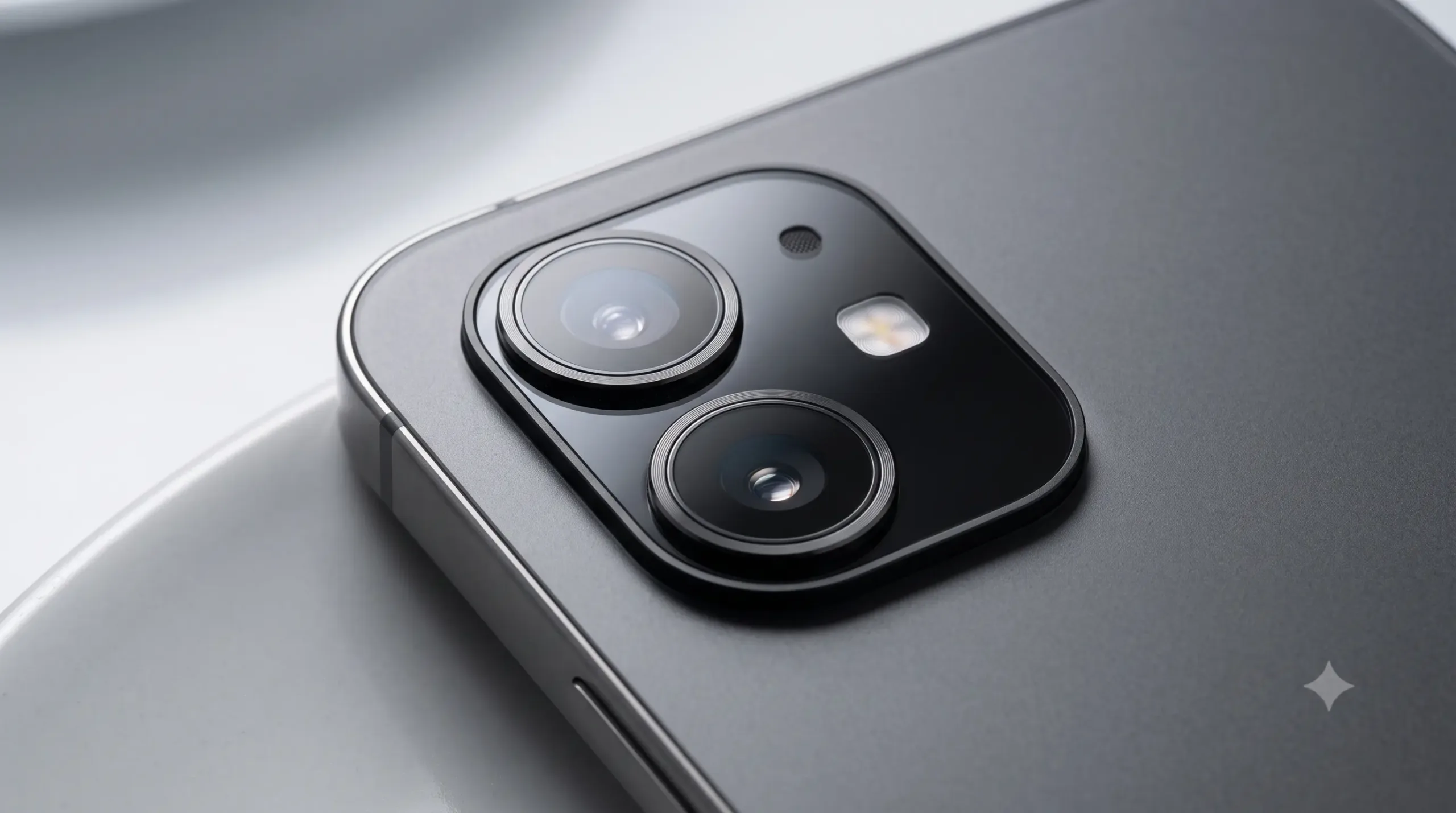
Cameras are the one area that might disappoint. Multiple leaks point to a dual 48MP rear setup — main and ultrawide, no telephoto. Compare that to the Pixel 10 Pro Fold or the Z Fold 7, both of which ship three rear lenses. If you’re a foldable buyer who leans on zoom, this is worth watching closely before you buy.
Security is getting a redesign too. Instead of Face ID, current leaks point to a side-mounted Touch ID sensor, likely to keep the device thin enough to fold cleanly. No under-display fingerprint reader, at least based on what’s leaked so far.
Then there’s price. This is the part that’ll make people wince: multiple independent reports have converged on a starting price above $2,000, with higher storage configurations potentially reaching $2,600 to $2,900. That would make it the most expensive iPhone Apple has ever sold, by a wide margin.
So where does that leave things? Closer than any prior year, but still not confirmed. Apple hasn’t said a word officially — everything above comes from supply chain sources, leakers, and analyst notes, not company statements. First-generation hardware from any company tends to ship with rough edges that get fixed by version two. Apple’s had over a decade to prepare for this one. That either means they’re being unusually careful, or the crease problem really was that hard to solve.
Either way, September isn’t far off now. We’ll know soon enough whether nine years of rumors were worth the wait.

Related posts

The Opportunity, Stated Plainly The U.S. creator economy sat near $50.9 billion in 2024. Estimates for the wider market now range from $80 billion to...

Problem You’re staring at a blank document, cursor blinking, trying to think of a digital product to sell. Nothing comes. Or worse — five ideas...

Problem Everyone’s telling you the same thing right now. Quit the job, build a course, sell an ebook, watch the passive income roll in while...

You built the thing. The checkout page works. The landing page looks sharp. And now you’re staring at an empty analytics dashboard, refreshing it every...
You’ve built the thing. Now you need somewhere to sell it — and the internet hands you three names on repeat: Gumroad, Podia, Shopify. Each...
Add comment