
No products in the cart.
USA Digital Product Business Scope in 2026-2027
The Opportunity, Stated Plainly
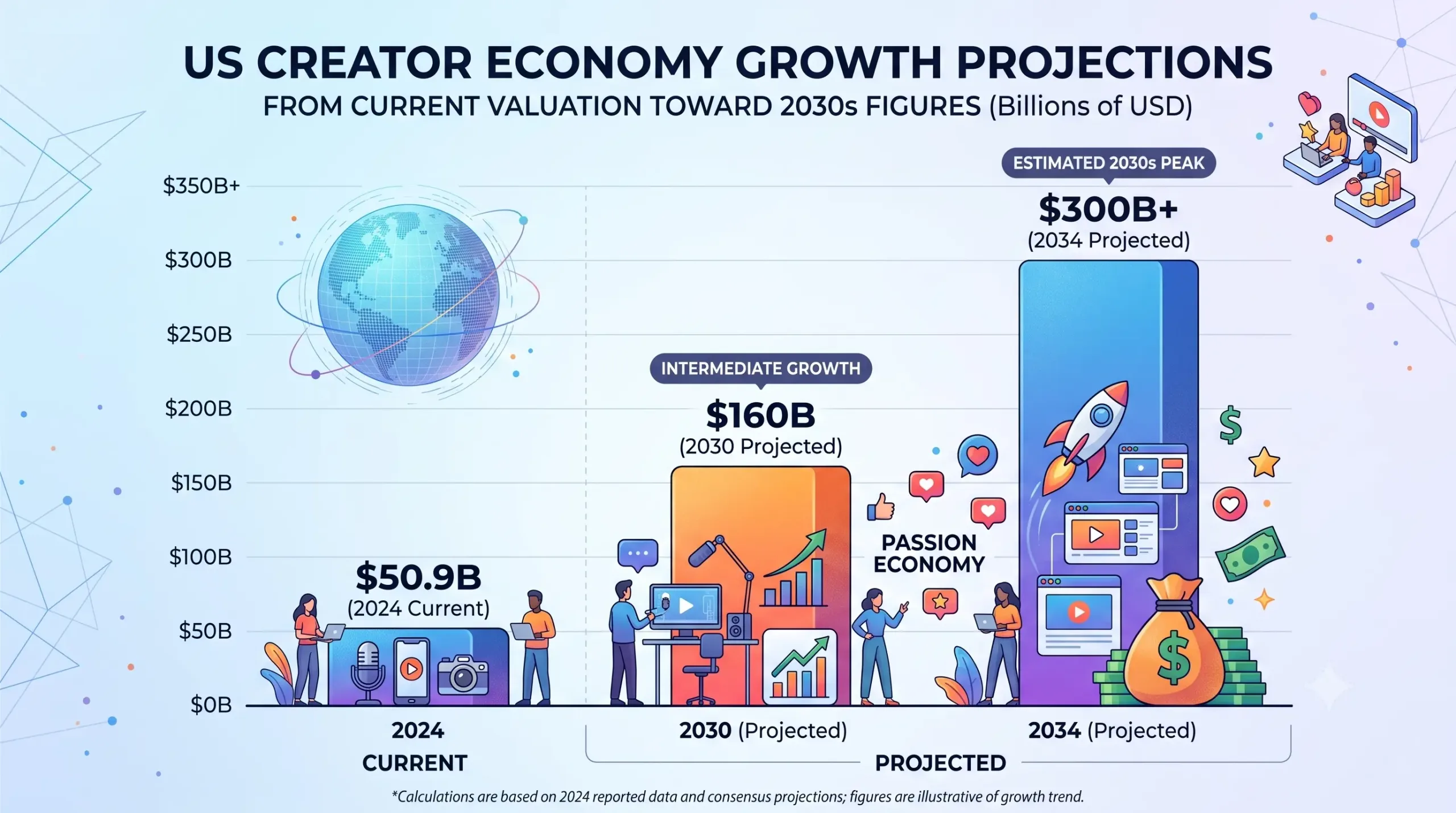
The U.S. creator economy sat near $50.9 billion in 2024. Estimates for the wider market now range from $80 billion to $93 billion depending on whose methodology you trust, with a trajectory toward $297 billion or more by the early 2030s. That’s not a hunch. That’s the number analysts keep landing on, across firms that don’t agree on much else.
Here’s the harder truth sitting underneath that number: bigger market doesn’t mean easier entry. It usually means the opposite.
Why the Gap Between “Big Market” and “Easy Win” Matters
America has roughly 162 million people who identify as content creators. Of those, 45 million work at it professionally. Sounds like an army of opportunity. It’s also an army of competition, all fishing in the same pond, most of them broadcasting the same generic advice.
And the honest numbers on income are rougher than the highlight reels suggest.
- The average creator takes about six and a half months to earn their first dollar.
- Only 46.7% of creators work full-time; the rest juggle it alongside other jobs.
- Across broader creator economy studies, just 1–5% of creators earn what anyone would call serious income.
So the scope is real. The odds of stumbling into it without a plan are not.
Where the Actual Money Sits
Break the U.S. slice down by monetization method, and a clear pattern shows up:
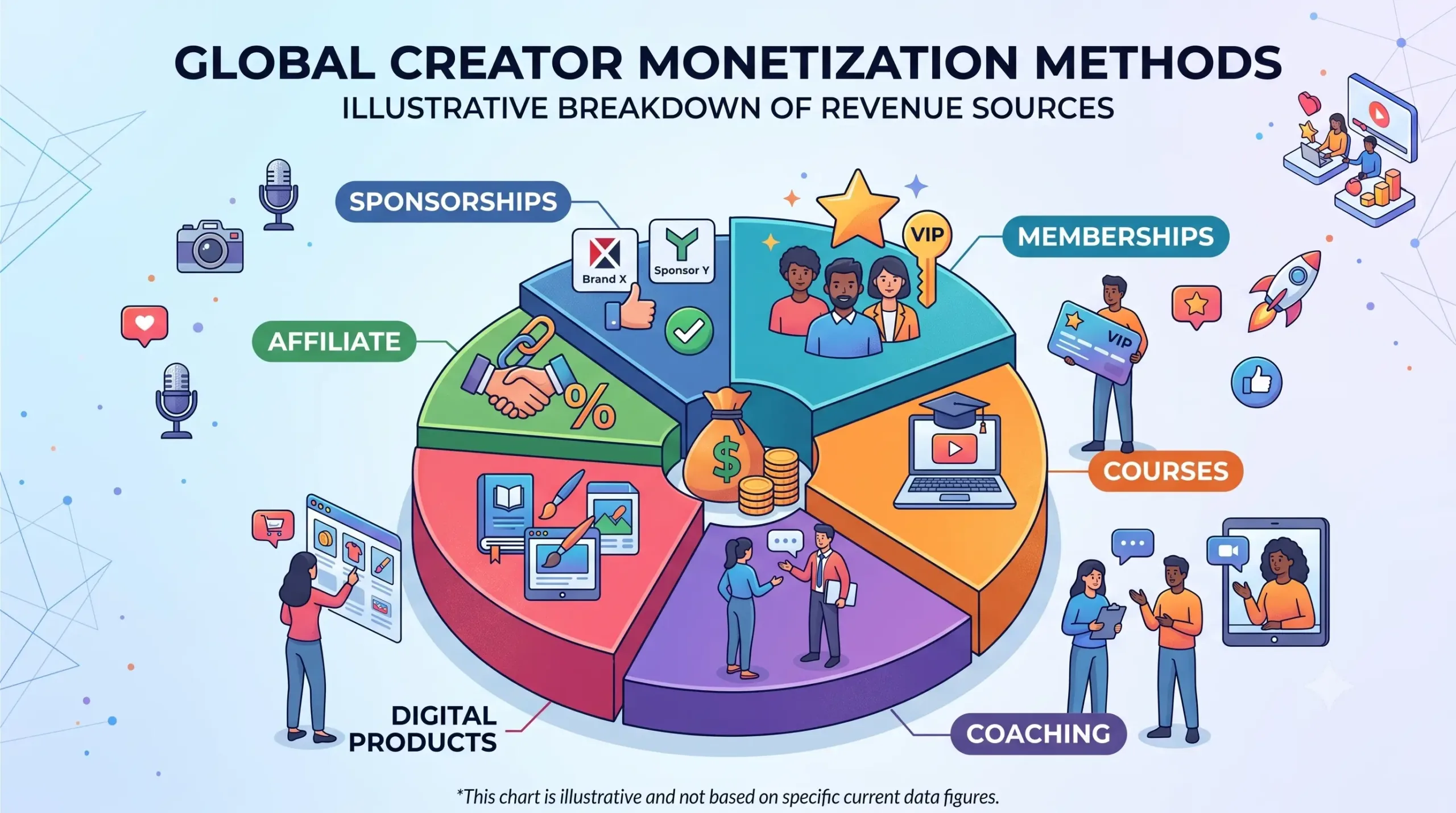
- 88% of creators use paid memberships
- 53% sell courses
- 51% offer coaching or services
- 37% sell digital products directly
- 22% run affiliate revenue
- 18% rely on brand sponsorships
Digital products specifically — courses, templates, ebooks, software — sit inside a global segment worth roughly $32 billion, carved out of the larger $290 billion creator economy. Within the U.S. market alone, online education revenue is projected to hit $99.84 billion in 2026, nearly half of the entire global e-learning figure. That single category is doing enormous, disproportionate work.
The Case for Digital Products Specifically
Profit margins are the real argument here, not hype.
Digital product creators typically run margins between 70% and 90%. Compare that to almost any physical product business, where inventory, shipping, and returns eat straight into the number. Zero inventory. No shipping cost. A product built once, sold indefinitely.
Consumer behavior backs the trend up too: 68% of internet users now pay for digital content monthly, and digital product transactions surged 70% between 2022 and 2024. That’s not a niche habit anymore. That’s mainstream purchasing behavior.
Where the Real Room Still Exists
Broad categories — generic productivity ebooks, generic Notion templates — are saturated. Everyone read the same “sell digital products” article and built the same thing.
Narrow niches are where the actual margin lives. Recent product-level data shows specific categories consistently outperforming crowded ones:
- Writing and publishing products: averaging around $15,750 per product
- Fitness and health niches: averaging over $11,000 per product
Both categories carry relatively few competing listings compared to oversaturated printables or generic course topics. Depth beats breadth. Every current dataset says the same thing.
The Honest Bottom Line
The U.S. digital product scope in 2026 is genuinely large, genuinely growing, and genuinely harder to break into than five years ago. Both things are true at once.
The creators actually earning real money aren’t succeeding because they found some secret category nobody else knows about. They’re succeeding because they picked something specific, validated demand before building, and treated their audience as the actual asset — not the product itself. The market’s big enough to support more entrants. It’s not big enough to reward showing up unprepared.

Related posts
Problem You’re staring at a blank document, cursor blinking, trying to think of a digital product to sell. Nothing comes. Or worse — five ideas...
Problem Everyone’s telling you the same thing right now. Quit the job, build a course, sell an ebook, watch the passive income roll in while...

You built the thing. The checkout page works. The landing page looks sharp. And now you’re staring at an empty analytics dashboard, refreshing it every...
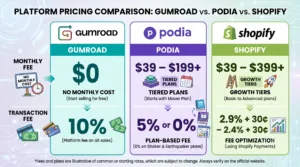
You’ve built the thing. Now you need somewhere to sell it — and the internet hands you three names on repeat: Gumroad, Podia, Shopify. Each...
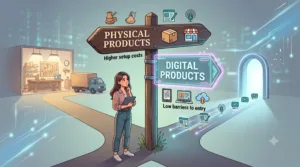
The Problem: You Have to Pick Somewhere to Start You want to sell something online. Great instinct — but “something” splits almost immediately into two...
Add comment