
No products in the cart.
Physical Products or Digital Products: A Cost and Margin Breakdown for New Sellers
The Problem: You Have to Pick Somewhere to Start
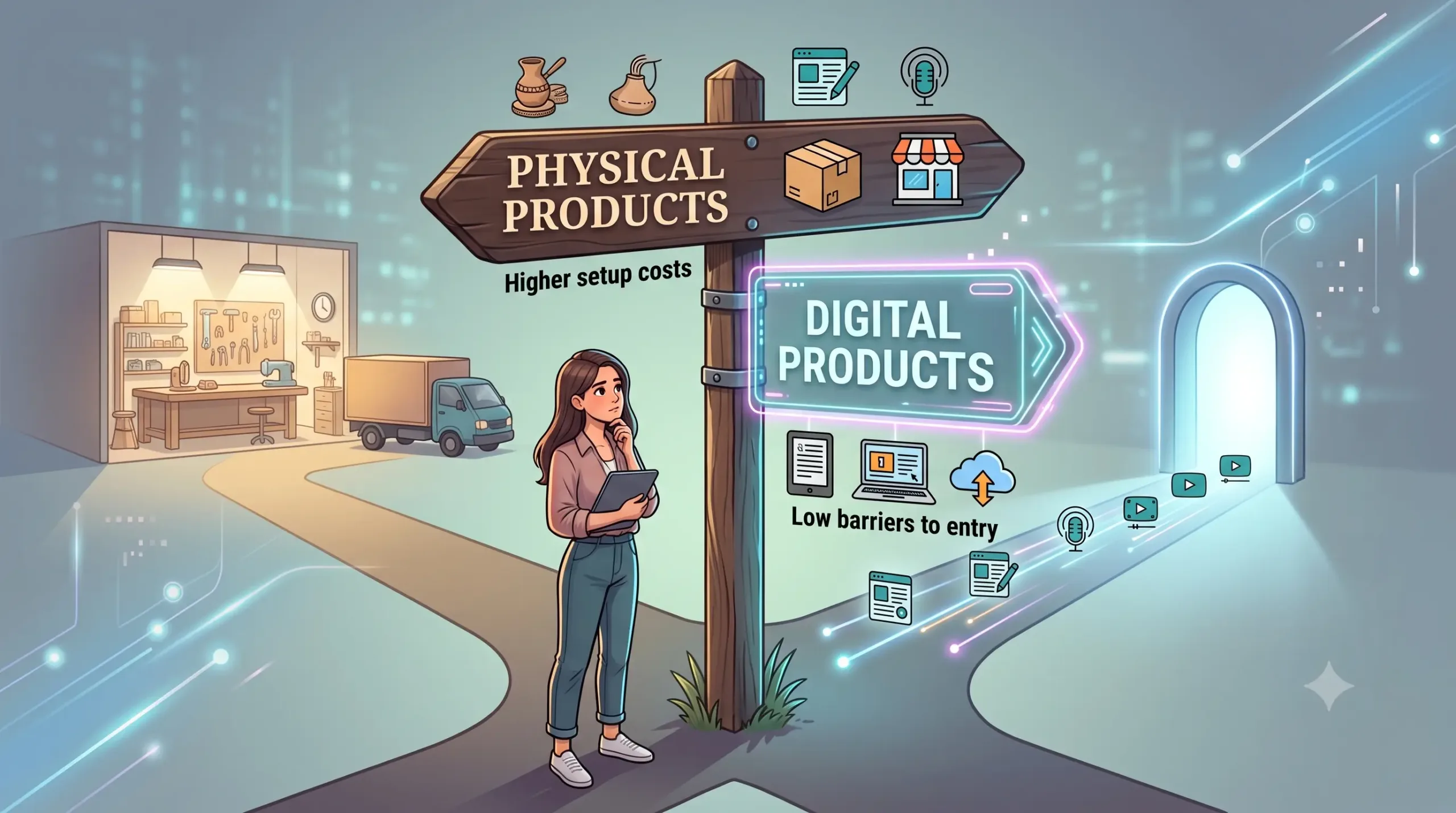
You want to sell something online. Great instinct — but “something” splits almost immediately into two very different roads: physical products you ship, or digital products you deliver instantly. Both roads have success stories plastered across every business podcast. Neither road tells you upfront what it actually costs to walk it, or how likely you are to make it to the end.
Beginners rarely fail because they picked the “wrong” model in some absolute sense. They fail because they picked a model without understanding its real economics — and then got surprised by numbers nobody mentioned in the YouTube video that convinced them to start.
The Agitation: What Nobody Tells You Upfront
Here’s the physical product reality most beginners don’t see until they’re already in it.
Dropshipping — the low-commitment entry point most beginners choose — sounds nearly free to start. It isn’t, not if you’re testing it seriously. A realistic three-month budget for actually validating products runs $3,500 to $8,000, once you account for platform fees, ad testing, automation tools, and cash reserves for payment processor holds. Shopify itself now recommends beginners budget $200–$600 per month just for the basics — platform, domain, apps, initial marketing tests.
And the margins on that investment are thin. Average ecommerce net profit margins sit near 10%, with only the best-performing brands breaking above 20%. Pure dropshipping specifically often compresses even further — 10% to 15% margins are typical once rising ad costs on platforms like TikTok and Meta eat into what’s left. Selling generic, easily-sourced products means competing almost entirely on price, and one competitor with deeper pockets can undercut you overnight.
There’s operational friction too, the kind that doesn’t show up in the “start dropshipping today” ads. Return rates in established markets run 15% to 20%, climbing past 25% in categories like apparel. Fraud losses across the industry were projected at $48 billion for 2025 alone. And 84% of dropshipping entrepreneurs cite finding a reliable supplier as their single biggest ongoing challenge — not marketing, not sales copy, just keeping a functioning supply chain intact.
Digital products dodge most of that physical-world mess. But beginners drawn to digital products for the “no inventory, no shipping” pitch often underestimate a different problem entirely: building genuine demand from zero, with no product to physically hand someone as proof it’s real.
The Solution: What the Real Numbers Say About Each Path
Physical Products: Higher Ceiling, Higher Cost of Entry
If you’re willing to hold your own inventory rather than dropship, the math actually improves. Businesses that control their own stock — buying in bulk, owning the customer experience end to end — report margins of 25% to 40%, roughly double what dropshippers typically see. The tradeoff is upfront cash: expect to need $5,000 to $20,000 for a first inventory batch, money you’re committing before you know for certain the product will sell.
Customer acquisition cost (CAC) adds another real, ongoing expense. Across the industry in 2026, CAC ranges from $20 to $100 depending on niche — beauty products averaging around $110, apparel near $90, food closer to $75. Every sale has to clear that acquisition cost before it generates real profit, which is exactly why margin discipline matters more than raw sales volume.
The one genuine advantage physical products carry that digital products can’t fully replicate: tangibility builds trust fast. A person can see, touch, and photograph a physical item. That’s a real psychological shortcut in getting someone to buy from an unknown, brand-new seller — digital products have to earn that same trust entirely through content, reviews, and reputation, which takes longer to build from nothing.
Digital Products: Lower Cost, Slower Trust-Building
Digital products flip the entire cost structure. No inventory. No shipping. No warehouse. No supplier relationship to manage or worry about collapsing.
Profit margins reflect that structural advantage directly: digital product creators typically run 70% to 90% margins — two to four times what even a well-run physical inventory business achieves. Once a course, template, or ebook exists, delivering it to the thousandth customer costs essentially nothing extra. That’s an economic reality physical products simply cannot match, no matter how efficient the supply chain gets.
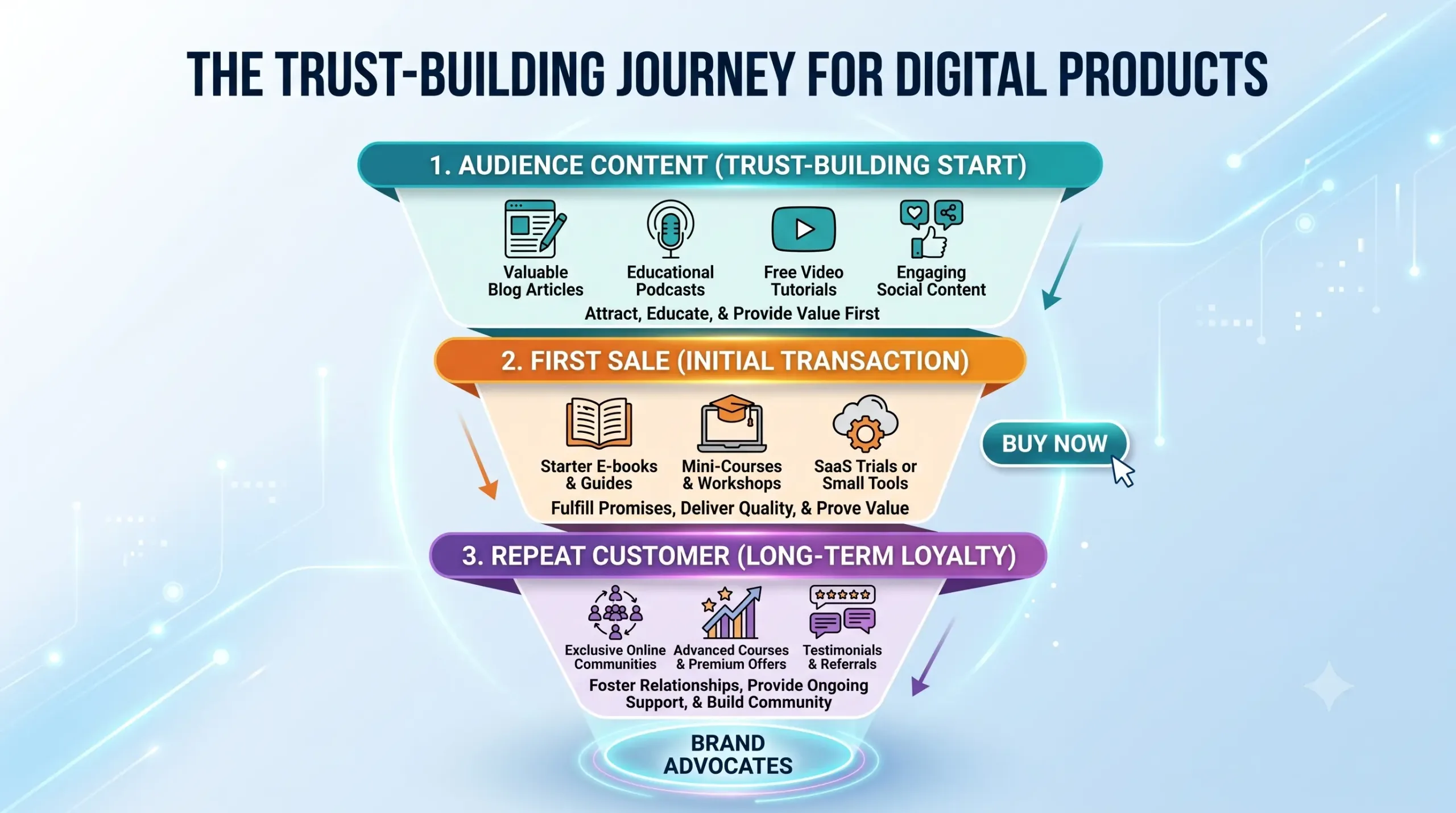
The catch, and it’s a real one: digital products depend almost entirely on audience and trust, built before the sale happens rather than proven by a tangible object after. A stranger can pick up an unfamiliar physical product off a shelf and evaluate it instantly. A stranger cannot “hold” an ebook or preview a course the same way — they’re relying entirely on your reputation, your content, your existing audience, or someone else’s word. That’s precisely why creators who launch digital products with zero existing audience typically take far longer to land their first sale than those who validate the idea publicly first, through content, before ever building the actual product.
Which One Should a Beginner Actually Pick?
Here’s the honest, unglamorous answer: it depends on which resource you have more of right now — cash, or content-building patience.
- Choose physical products (specifically inventory-owned, not pure dropshipping) if: you have several thousand dollars of risk capital you can genuinely afford to lose, and you’re comfortable with logistics, supplier relationships, and slower iteration cycles.
- Choose dropshipping specifically if: you want the lowest possible upfront cash commitment and are willing to accept thinner margins and heavier competition in exchange for that flexibility.
- Choose digital products if: you have limited startup capital but are willing to invest real time building an audience or content presence before you have a finished product to sell — because that audience-building phase is doing the trust-building work a physical object would otherwise do for you.
The pattern underneath all these numbers is consistent, regardless of which model you lean toward: capital-light models demand more patience and audience-building before revenue arrives. Capital-heavier models can generate revenue faster, but only if you can absorb the upfront risk without it sinking you if the first attempt doesn’t work.
Neither path is the “beginner-friendly” one in some universal sense — they just ask beginners to pay in different currencies. Physical products ask for cash upfront. Digital products ask for time and audience-building upfront. Know which one you actually have more of before you pick, and the decision gets considerably less confusing than the endless “which is better” debate makes it sound.

Related posts

At Build 2026, Microsoft quietly previewed something that actually looks smart: Project Solara. Three layers, stacked on top of each other. First, an operating system...

Here’s a number that should stop you mid-scroll: across 146,271 products analyzed on Gumroad in 2026, the median creator earned $72 a month. Not $72,000....

Five years ago, launching a digital product meant weeks of writing, editing, designing, and second-guessing your own copy at 1 a.m. Now a solo creator...

For most of the last decade, running enterprise Linux without paying Red Hat’s licensing fees meant one thing: find a distribution that copies RHEL exactly,...

Usain Bolt ran 100 meters in 9.58 seconds. That number stood for 17 years. Nobody touched it. Not another sprinter, not a faster shoe, not...
Add comment