
No products in the cart.
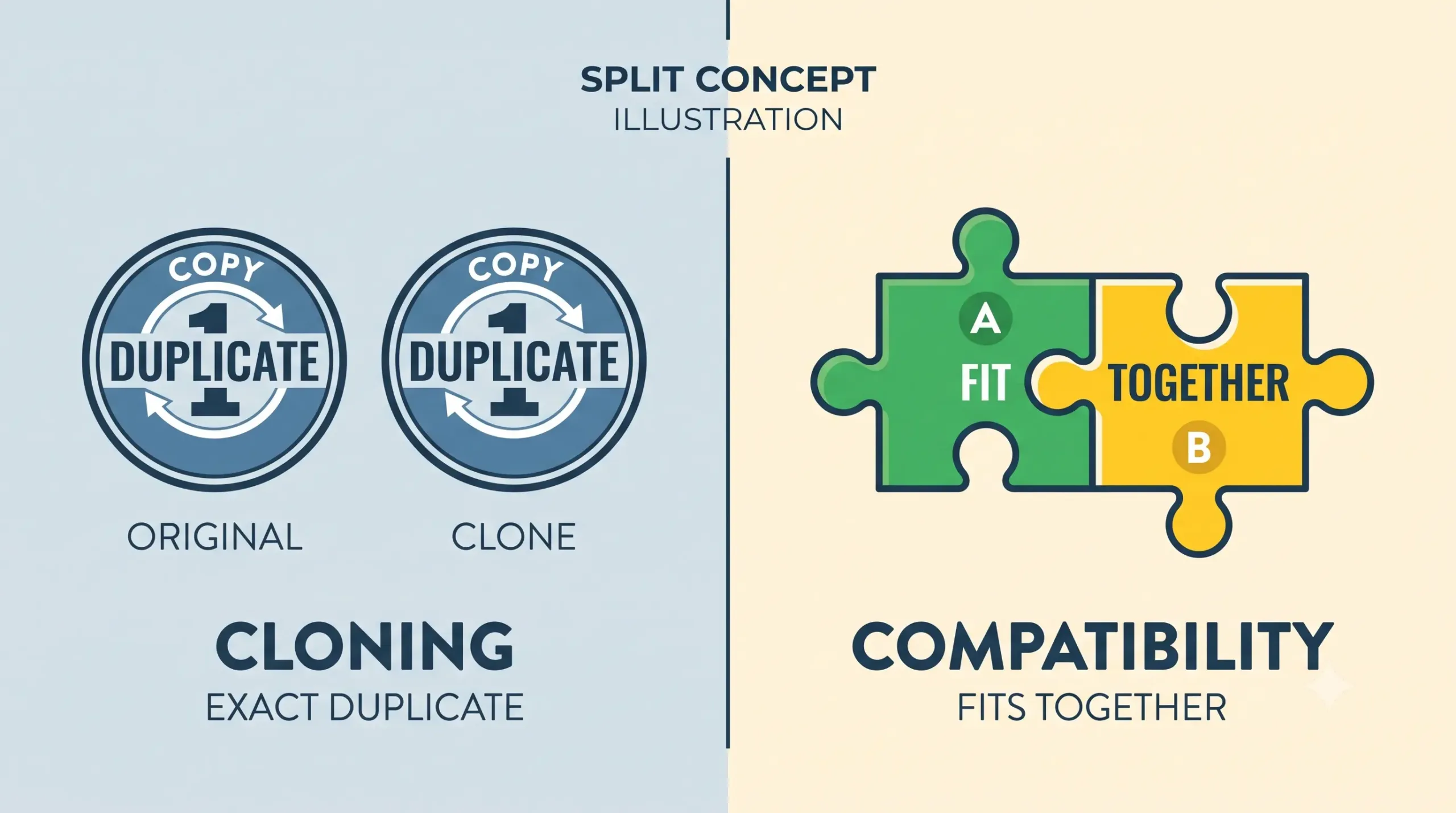
Why AlmaLinux Stopped Trying to Be a Perfect Clone
For most of the last decade, running enterprise Linux without paying Red Hat’s licensing fees meant one thing: find a distribution that copies RHEL exactly, bugs included. CentOS built that model. When Red Hat killed it off, AlmaLinux picked up the mantle and kept the same philosophy — replicate everything, down to obscure compiler flags, so that nothing behaved differently from upstream.
That approach worked well enough until Red Hat changed how it distributes source code in 2023. The pipeline that clone projects relied on to build bug-for-bug copies broke, and IT teams were left with an uncomfortable question: keep fighting to maintain an exact replica of a moving target, or find a different way to do enterprise Linux altogether.
The trouble with pure replication is that you inherit every decision your upstream vendor makes, whether or not it fits your environment. If Red Hat stops supporting a chip your servers run on, your “identical” clone stops supporting it too — even if the hardware is fine and fully paid off. At that point your options narrow to buying new servers or running unsupported ones. A clone strategy, in effect, puts your infrastructure decisions in the hands of a vendor who has no visibility into what you’re actually running.
Where This Started to Hurt
The clearest example showed up during RHEL 10 development. Upstream engineers decided to default new builds to the x86-64-v3 instruction set — a reasonable call if you’re only thinking about fresh cloud deployments. But most data centers aren’t just cloud deployments. There’s a huge amount of older, still-functional hardware out there limited to x86-64-v2, and none of it gets replaced just because a new OS version shipped.
Under a strict bug-for-bug clone model, that older hardware simply can’t run the new OS. No install, no security updates, no path forward except ripping out equipment that still works — an expensive problem to have for no reason other than following upstream’s lead.
Other decisions compounded it. Support for SPICE (used for remote virtual desktop protocols) got dropped upstream. So did KVM virtualization on IBM POWER. In a pure clone, those tools just vanish too, and teams that depended on them are stuck writing workarounds or migrating remote-management stacks on short notice — reacting to someone else’s roadmap instead of their own.
What AlmaLinux 10.2 Changes
AlmaLinux 10.2 moves away from exact replication and instead targets ABI (Application Binary Interface) compatibility. In practice, this means software compiled for RHEL 10 — databases, management agents, proprietary tools — still runs correctly on AlmaLinux, because the binary interface behaves the way that software expects. The OS underneath doesn’t have to be an identical copy for that to hold true.
That shift opened room for changes sysadmins had actually been asking for:
- A dedicated x86-64-v2 build, shipped alongside the standard v3 release, keeping older hardware supported with security patches through May 2035
- EPEL packages built for v2 as well, so third-party tools don’t quietly break on legacy silicon
- SPICE support restored
- KVM virtualization back on IBM POWER
- Kernel frame pointers enabled by default in Linux 6.12, making it easier to profile performance issues without swapping to a debug kernel
- Secure Boot support added for ARM
None of this required abandoning stability — it required deciding that stability should serve the hardware people actually run, not just mirror upstream’s assumptions about it.
An Illustrative Example: What This Looks Like at Scale
To see why this matters in practice, consider a hypothetical (but realistic) scenario: a large infrastructure provider running 15,000 bare-metal servers, roughly 4,500 of them on older x86-64-v2 hardware.
Compliance requirements push them toward a version-10 OS to lock in a decade of security support. Under the old clone model, that’s a dead end — RHEL 10 and its strict clones require v3 hardware, which would mean an unplanned refresh of those 4,500 machines. At roughly $4,200 per server, that’s close to $19 million in capital expense the business never budgeted for.
With AlmaLinux 10.2’s x86-64-v2 build, that hardware stays in service. ABI compatibility means their existing RHEL-certified billing and monitoring software continues running without modification. Restored SPICE support means their custom remote-desktop tooling doesn’t need to be rewritten — a project that could easily run into hundreds of engineering hours on its own. And with frame pointers enabled, engineers get a real shot at diagnosing performance issues (like memory leaks in a custom hypervisor) that would otherwise be much harder to trace.
(Note: the specific figures above are illustrative, meant to show the order of magnitude involved — not numbers from an audited case study. If you want to cite a real customer example, that would need actual sourcing.)
The Bigger Point
Stability in enterprise Linux shouldn’t mean blindly inheriting every upstream decision, especially when some of those decisions actively work against the hardware you already have. AlmaLinux 10.2’s bet on ABI compatibility over exact cloning is a fairly significant philosophical shift for the project — and it’s one aimed squarely at people running real, imperfect, mixed-generation server fleets rather than idealized greenfield deployments.
If you’re managing infrastructure on older silicon, it’s worth checking which of your servers are limited to x86-64-v2 and what your options look like under this new model.


Related posts

The Opportunity, Stated Plainly The U.S. creator economy sat near $50.9 billion in 2024. Estimates for the wider market now range from $80 billion to...

Problem You’re staring at a blank document, cursor blinking, trying to think of a digital product to sell. Nothing comes. Or worse — five ideas...

Problem Everyone’s telling you the same thing right now. Quit the job, build a course, sell an ebook, watch the passive income roll in while...

You built the thing. The checkout page works. The landing page looks sharp. And now you’re staring at an empty analytics dashboard, refreshing it every...

You’ve built the thing. Now you need somewhere to sell it — and the internet hands you three names on repeat: Gumroad, Podia, Shopify. Each...
Add comment